




As manufacturing industries continue pursuing higher efficiency and lower production costs,the debate between cold heading mold technology and traditional machining methods has become increasingly important.From automotive fasteners to industrial hardware,manufacturers are searching for the most cost-effective and precise way to produce metal parts at scale.
While traditional machining remains widely used for custom and low-volume production,modern cold heading tooling is transforming the way high-volume metal components are manufactured.In 2026,more companies are investing in advanced cold forming molds to improve productivity,reduce waste,and achieve consistent product quality.
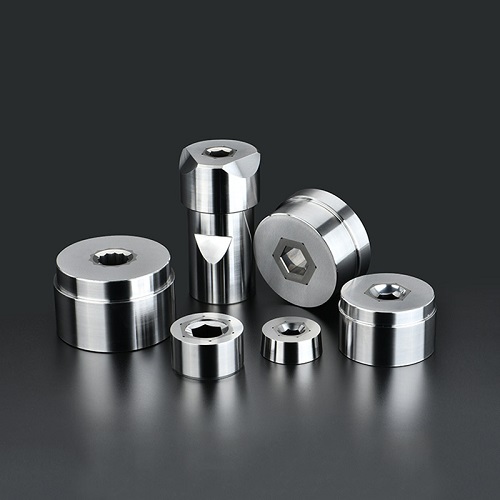
What Is a Cold Heading Mold?
A cold heading mold is a specialized forming tool used in cold heading machines to shape metal wire or rod material into screws,bolts,rivets,and other fasteners without heating the material.Unlike machining,which removes material through cutting,cold heading reshapes metal under high pressure.
This process improves material utilization while maintaining the structural integrity of the metal.Modern precision cold heading molds are designed to withstand extreme pressure and support high-speed mass production environments.
Why Cold Heading Is More Efficient
Compared with traditional CNC machining,cold heading offers several major advantages in large-scale manufacturing.
Higher Production Speed
Cold heading machines can produce thousands of fasteners per hour,making them far more efficient for mass production than conventional machining equipment.This is especially valuable in automotive and electronics manufacturing industries.
Better Material Utilization
Traditional machining removes excess metal during cutting,which increases raw material waste.In contrast,cold forming tooling reshapes the material directly,significantly improving material efficiency and reducing costs.
Improved Mechanical Strength
Because the metal grain flow remains continuous during the cold heading process,parts produced using Cold Heading Dies often have higher strength and better fatigue resistance than machined components.
Lower Production Costs
For large production volumes,the combination of faster output,lower waste,and reduced secondary processing makes cold heading mold manufacturing highly cost-effective.
Key Features of Modern Cold Heading Molds
Today’s Tungsten Carbide cold heading molds are engineered for durability and precision.Manufacturers focus heavily on wear resistance and dimensional stability to support long production cycles.
Main features include:
High hardness and wear resistance
Precision cavity design
Excellent impact resistance
Long service life
Compatibility with multi-station heading machines
Stable high-speed forming performance
Advanced surface coatings and heat treatment technologies also help extend tooling lifespan and reduce downtime.
Application Industries
Modern cold heading tooling is widely used in industries such as:
Automotive fastener manufacturing
Aerospace hardware production
Electronics component manufacturing
Construction hardware production
Industrial machinery assembly
Household appliance manufacturing
As global demand for precision fasteners continues growing,the role of high-performance custom cold heading molds becomes increasingly important.
FAQ
What is the main advantage of cold heading over machining?
Cold heading offers faster production speed,lower material waste,and improved strength for high-volume metal parts.
Are cold heading molds suitable for complex parts?
Yes.Modern precision cold heading molds can produce complex fasteners and custom-shaped components with excellent consistency.
Why is Tungsten Carbide used in cold heading molds?
Tungsten Carbide provides exceptional hardness and wear resistance,making it ideal for high-pressure forming applications.
Which industries benefit most from cold heading technology?
Automotive,aerospace,electronics,and industrial fastener manufacturers benefit greatly from cold heading processes.