




Tungsten Carbide dies are widely used in industries that require high wear resistance, excellent hardness, and long service life, such as wire drawing, cold heading, metal forming, extrusion, and precision manufacturing. Due to their superior mechanical properties, Tungsten Carbide Dies can withstand extreme pressure, friction, and high-temperature working environments.
Understanding how to make tungsten carbide dies helps manufacturers and buyers better evaluate die quality, production processes, and customization capabilities. The manufacturing of custom tungsten carbide dies involves multiple precision steps, including powder preparation, pressing, sintering, machining, and quality inspection.
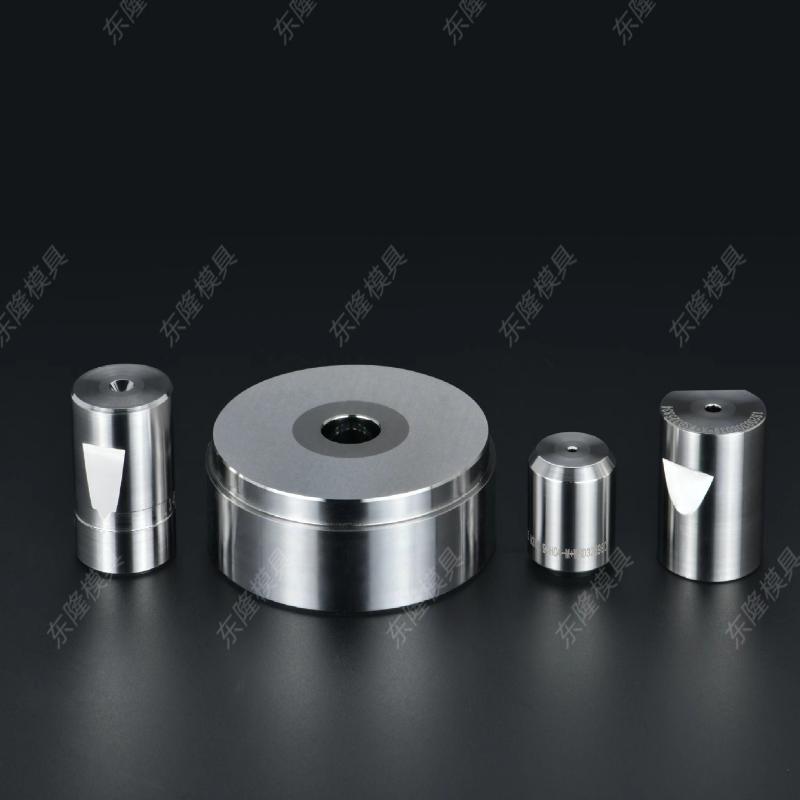
What Are Tungsten Carbide Dies?
Tungsten carbide dies are precision tools made from tungsten carbide material, a type of hard alloy composed mainly of tungsten carbide powder and a metal binder, usually cobalt.
Compared with conventional steel dies, tungsten carbide tooling offers:
Extremely high hardness
Excellent wear resistance
High compressive strength
Long service life
Good dimensional stability
Superior performance under high-pressure conditions
Because of these advantages, carbide dies are commonly used for applications such as:
Wire drawing dies
Stamping dies
Extrusion dies
Metal forming dies
Precision molding tools
How to Make Tungsten Carbide Dies?
The production of tungsten carbide dies requires advanced powder metallurgy technology and precision machining. The complete manufacturing process includes several important stages.
1. Raw Material Preparation
The first step in tungsten carbide die manufacturing is selecting high-quality raw materials.
The main materials include:
Tungsten Carbide Powder (WC)
Tungsten carbide powder provides the hardness and wear resistance required for demanding applications. The particle size of the powder directly affects the final performance of the die.
Cobalt Binder
Cobalt is commonly used as a binder material to improve toughness and impact resistance. The ratio between tungsten carbide and cobalt determines the hardness and strength of the finished product.
Different applications require different material grades. For example:
Higher tungsten carbide content provides better wear resistance.
Higher cobalt content improves toughness and impact resistance.
2. Powder Mixing and Grinding
After preparing the raw materials, tungsten carbide powder and cobalt powder are mixed evenly.
During this stage, manufacturers use ball milling equipment to achieve:
Uniform material distribution
Controlled particle size
Improved powder consistency
Proper mixing is essential for producing high-quality carbide dies with stable mechanical properties.
3. Pressing and Preforming
The mixed powder is then compressed into the required die shape through a pressing process.
Common forming methods include:
Cold isostatic pressing
Mechanical pressing
Hydraulic pressing
At this stage, the pressed part is called a "green compact." It has the basic shape of the final tungsten carbide die, but it still requires further processing and sintering.
4. Sintering Process
Sintering is one of the most important steps in manufacturing tungsten carbide dies.
During sintering:
The compacted powder is heated at a high temperature.
Tungsten carbide particles bond together.
The cobalt binder forms a strong structure.
The material achieves high density and hardness.
After sintering, the tungsten carbide blank obtains its final mechanical properties, including:
High hardness
High strength
Excellent wear resistance
A precise sintering process is essential for producing reliable tungsten Carbide Cold Heading Dies and carbide drawing dies.
5. Precision Grinding and Machining
After sintering, the tungsten carbide blank is processed through precision machining.
Because tungsten carbide is extremely hard, traditional machining methods cannot be used effectively. Manufacturers usually use:
Diamond grinding
CNC grinding
Electrical discharge machining (EDM)
Laser machining
Precision machining ensures the die meets strict requirements for:
Dimension accuracy
Surface finish
Hole diameter
Geometric tolerance
For applications such as wire drawing dies, even small dimensional errors can affect product quality, so precision grinding is critical.
6. Surface Treatment and Coating
Some custom tungsten carbide dies require additional surface treatments to improve performance.
Common coatings include:
Diamond coating
DLC coating
TiN coating
TiCN coating
Surface coatings can provide:
Lower friction
Better wear resistance
Longer service life
Improved production efficiency
These treatments are especially useful for high-speed manufacturing applications.
7. Quality Inspection
Before delivery, every tungsten carbide die should undergo strict quality testing.
Common inspection items include:
Hardness Testing
Measures the ability of the carbide die to resist deformation and wear.
Dimensional Inspection
Ensures the die meets customer specifications and production requirements.
Surface Roughness Testing
Checks whether the working surface is smooth enough for precise forming operations.
Material Inspection
Verifies carbide composition and structural consistency.
Professional tungsten carbide die manufacturers use advanced testing equipment to guarantee product reliability.
Types of Tungsten Carbide Dies
Different industries require different types of carbide dies.
Tungsten Carbide Wire Drawing Dies
Carbide drawing dies are widely used for producing metal wires, including:
Copper wire
Steel wire
Aluminum wire
Alloy wire
They provide excellent wear resistance and maintain consistent wire dimensions during high-volume production.
Tungsten Carbide Cold Heading Dies
Tungsten carbide cold heading dies are commonly used for manufacturing:
Screws
Bolts
Fasteners
Automotive components
They can withstand repeated impact loads and high forming pressure.
Custom Tungsten Carbide Dies
Many manufacturers provide custom tungsten carbide dies according to customer requirements.
Customization options include:
Special dimensions
Different carbide grades
Complex shapes
Specific tolerances
Customized surface treatments
Custom carbide dies are ideal for industries requiring unique forming solutions.
Why Choose Tungsten Carbide Dies?
Compared with traditional steel dies, tungsten carbide dies offer several advantages:
Longer Service Life
The excellent wear resistance of tungsten carbide reduces replacement frequency and production downtime.
Higher Production Efficiency
Durable carbide dies maintain stable performance during continuous manufacturing.
Better Product Accuracy
High dimensional stability helps manufacturers produce consistent finished products.
Cost Savings
Although tungsten carbide dies have a higher initial cost, their long lifespan reduces overall tooling costs.
How to Choose a Reliable Tungsten Carbide Die Manufacturer?
When selecting a tungsten carbide die manufacturer, consider the following factors:
Manufacturing Capability
A professional supplier should have advanced equipment for:
Powder metallurgy
Precision grinding
CNC machining
Quality testing
Material Quality
High-quality tungsten carbide materials directly affect die performance and service life.
Customization Service
A reliable manufacturer should provide custom carbide tooling solutions based on different applications.
Industry Experience
Experienced manufacturers understand different forming requirements and can recommend suitable carbide grades and designs.
FAQ About Tungsten Carbide Dies
What material is used to make tungsten carbide dies?
Tungsten carbide dies are mainly made from tungsten carbide powder combined with cobalt binder. The ratio of these materials determines hardness, toughness, and wear resistance.
How long do tungsten carbide dies last?
The service life of tungsten carbide dies depends on material grade, working conditions, production speed, and maintenance. Properly manufactured carbide dies can last significantly longer than conventional steel dies.
Are tungsten carbide dies better than steel dies?
Yes. Tungsten carbide dies provide higher hardness, better wear resistance, and longer service life compared with steel dies, making them suitable for high-volume production.
Can tungsten carbide dies be customized?
Yes. Professional manufacturers can produce custom tungsten carbide dies according to specific sizes, shapes, tolerances, and application requirements.
What industries use tungsten carbide dies?
Tungsten carbide dies are widely used in:
Automotive manufacturing
Fastener production
Wire processing
Electronics
Metal forming
Machinery manufacturing