




Carbide Nut Die is an important precision tooling component used in the manufacturing of nuts and fasteners. It is mainly made from Tungsten Carbide, a material known for its excellent hardness, wear resistance, and compressive strength.
In the fastener manufacturing industry, Carbide Nut Die is widely used for cold forging, cold heading, and cold extrusion processes to form metal materials into different types of nuts with high accuracy and consistency.
Compared with traditional steel dies, Tungsten Carbide Nut Die provides a longer service life and better dimensional stability, making it an ideal choice for high-volume fastener production, automotive components, aerospace fasteners, and industrial hardware manufacturing.
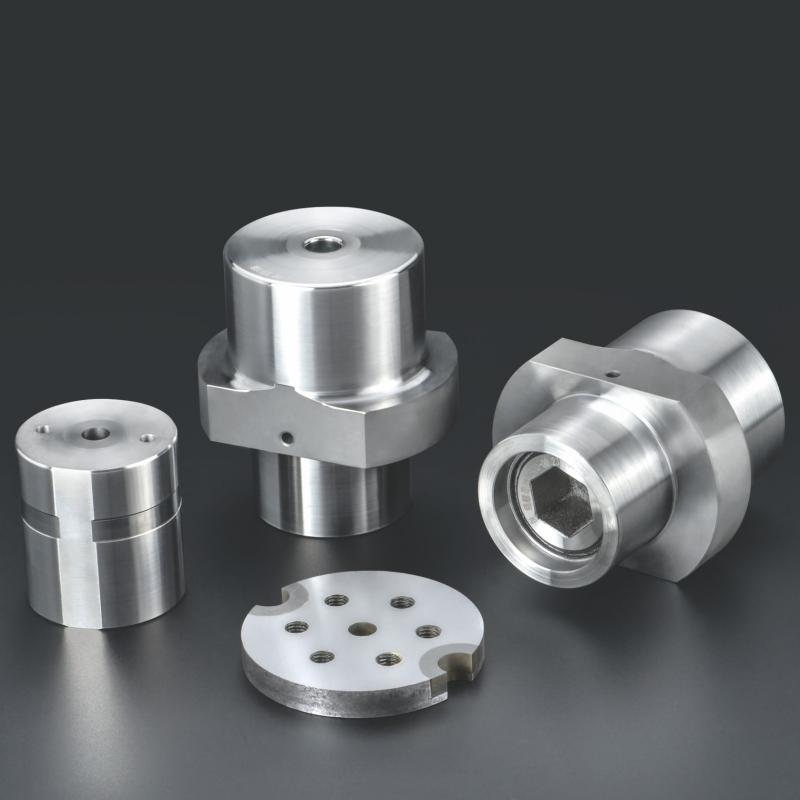
What Is Carbide Nut Die?
A Carbide Nut Die is a specialized forming tool made from tungsten carbide that is used to produce nuts through metal forming processes. During production, metal wire or bar materials are placed into the die cavity and shaped under high pressure through cold forging equipment.
Unlike ordinary steel dies, carbide dies can withstand repeated impact loads, high pressure, and continuous friction during production.
A typical carbide nut die consists of:
Tungsten carbide insert
Steel housing
Precision-machined die cavity
Customized forming structure
The die cavity is designed according to the required nut shape, size, and production requirements.
Common products manufactured using carbide nut dies include:
Hex nuts
Flange nuts
Lock nuts
Automotive nuts
Customized fasteners
What Materials Are Used for Carbide Nut Dies?
The main material used for Carbide Nut Die Manufacturing is tungsten carbide.
Tungsten Carbide
Tungsten carbide is a composite material made from tungsten carbide particles and cobalt binder. It is widely used in precision tooling because of its excellent mechanical properties.
Key advantages include:
Extremely high hardness
Excellent wear resistance
High compressive strength
Good dimensional stability
Resistance to deformation under high pressure
These properties make Tungsten Carbide Nut Die suitable for demanding cold forging applications.
Cobalt Binder
Cobalt is commonly added as a binder material to improve toughness and impact resistance. The percentage of cobalt can be adjusted according to different production requirements.
For applications requiring higher wear resistance, manufacturers may use carbide grades with lower cobalt content. For applications requiring higher impact resistance, carbide grades with higher cobalt content may be selected.
How Does Carbide Nut Die Work?
The working principle of a Carbide Nut Die is based on plastic deformation during the cold forging process.
Material Preparation
Metal wire or bar stock is cut into specific lengths according to the required nut size.
Cold Heading Process
The prepared material is placed into the carbide die cavity. A punch applies high pressure to deform the metal and create the basic nut shape.
Nut Forming Process
During the forming process, the material flows inside the die cavity to achieve the required dimensions and geometry.
Finishing Process
After forming, additional operations such as threading, surface treatment, and inspection may be performed to complete the final fastener product.
Because carbide dies provide excellent dimensional accuracy, manufacturers can achieve stable production quality during large-scale manufacturing.
Advantages of Carbide Nut Die
Longer Service Life
One of the biggest advantages of Carbide Dies for Fasteners is their excellent wear resistance.
Compared with conventional steel dies, carbide nut dies can maintain their performance for a much longer production cycle, reducing downtime caused by frequent die replacement.
High Dimensional Accuracy
Precision carbide dies help maintain consistent product dimensions, which is especially important for automotive and aerospace fasteners that require strict quality standards.
Excellent Wear Resistance
During cold forging, dies experience high pressure and continuous friction. Tungsten carbide materials can effectively resist wear and maintain stable performance.
Suitable for High-Speed Production
Due to their durability and strength, Carbide Forging Tools are widely used in automated production lines requiring high efficiency and continuous operation.
Carbide Nut Die Applications
Carbide Nut Dies are widely used in various industries that require reliable and high-strength fasteners.
Automotive Industry
Automotive manufacturers use carbide nut dies to produce:
Engine fasteners
Chassis nuts
Suspension components
High-strength automotive hardware
Aerospace Industry
Aerospace fasteners require excellent strength, accuracy, and reliability. Tungsten Carbide Nut Dies help manufacturers produce precision fasteners that meet strict performance requirements.
Construction Industry
Carbide dies are also used for producing nuts and bolts used in:
Steel structures
Bridges
Industrial equipment
General Industrial Manufacturing
Many industrial machines and equipment rely on precision fasteners produced using carbide forming tools.
Carbide Nut Die vs Steel Nut Die
Choosing the right die material is important for production efficiency and product quality.
| Feature | Carbide Nut Die | Steel Nut Die |
|---|---|---|
| Material | Tungsten Carbide | Tool Steel |
| Hardness | Higher | Lower |
| Wear Resistance | Excellent | Moderate |
| Service Life | Longer | Shorter |
| Production Volume | High-volume production | Small or medium production |
| Initial Cost | Higher | Lower |
| Accuracy | Higher dimensional stability | More affected by wear |
Although Carbide Nut Die has a higher initial investment, its longer service life and lower maintenance requirements make it more cost-effective for mass production.
Factors to Consider When Choosing Carbide Nut Die
Nut Size and Shape
Different nut designs require customized die cavities. Manufacturers need to consider dimensions, geometry, and forming requirements.
Material Grade
Different carbide grades provide different balances between hardness and toughness. The correct grade should be selected based on production conditions.
Production Volume
For high-volume fastener production, Tungsten Carbide Dies are usually preferred because they provide longer tool life.
Manufacturing Precision
High-precision applications require advanced Precision Carbide Dies with strict dimensional control.
Carbide Nut Die Manufacturing Process
The production of a carbide nut die requires advanced machining and precision processing technologies.
Carbide Powder Preparation
Tungsten carbide powder is mixed with cobalt binder materials according to the required performance specifications.
Pressing and Sintering
The carbide material is pressed into the required shape and sintered at high temperatures to achieve high density and hardness.
Precision Grinding
After sintering, the die is precisely ground to achieve accurate dimensions and surface finish.
Quality Inspection
Finished carbide dies are inspected for:
Dimensional accuracy
Hardness
Surface quality
Performance stability
Advanced Carbide Die Manufacturing technology ensures reliable performance in demanding industrial applications.