




A Tungsten Carbide Die is a hard alloy component commonly used in the manufacture of wear-resistant cutting tools such as drill bits, milling cutters, and other cutting tools. Its defining traits—high hardness, high wear resistance, and high heat resistance—come from its composition and the powder metallurgy process used to produce it, which is why it holds up to high-strength cutting and grinding work across mechanical processing, aerospace, and automotive manufacturing.
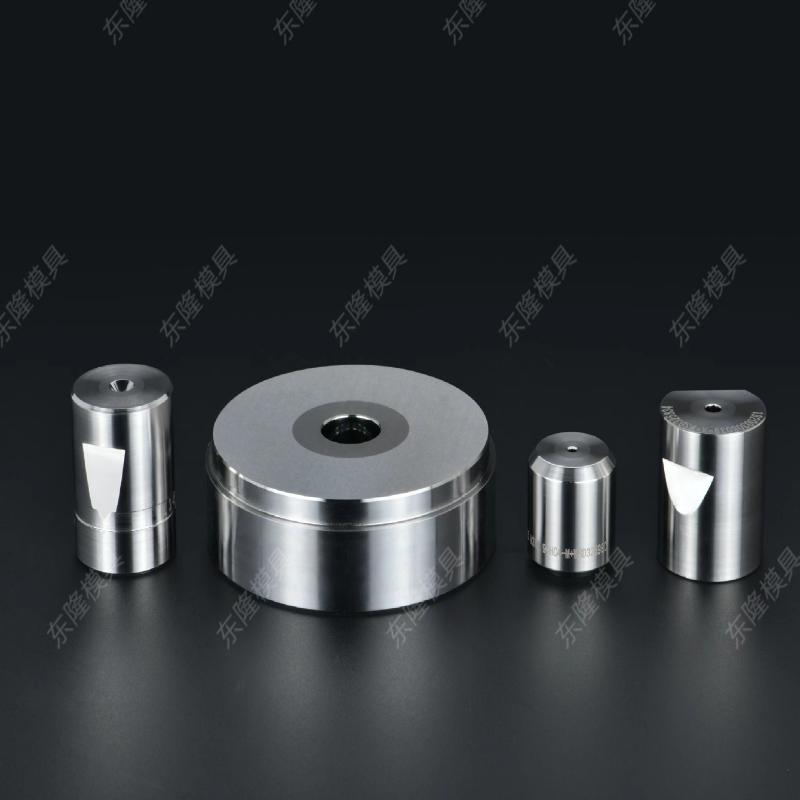
What Tungsten Carbide Die Is Made Of
The main components are Tungsten Carbide (WC) and cobalt (Co). Tungsten carbide provides the high hardness and wear resistance the material is known for, while cobalt acts as a binder that improves toughness and strength—without it, a pure tungsten carbide structure would be too brittle for the repeated impact and friction involved in cutting tool applications.
How Tungsten Carbide Dies Are Manufactured
Production relies on powder metallurgy technology, which breaks down into four main stages:
Compression molding — tungsten carbide powder is mixed with a binder and pressed into the desired shape and size
Sintering — the pressed material is heated to high temperature, causing the binder to evaporate and forming a metallurgical bond between the tungsten carbide particles
Processing — the sintered material is cut, ground, and polished to reach the required dimensions and precision
Coating — a hard coating such as TiN or TiCN is applied to further improve wear resistance and heat resistance
Each stage matters for the final result—skipping or rushing sintering, for example, weakens the metallurgical bond between particles, while inconsistent coating reduces the tool life gains the coating is meant to provide.
Why These Properties Matter For Cutting Tools
Cutting tools like drill bits and milling cutters face constant friction and heat during operation. A material that softens or wears down quickly under these conditions leads to more frequent tool changes and inconsistent part quality. Because Tungsten Carbide Dies hold their hardness and shape even under sustained high-strength cutting and grinding, they support longer tool life and more consistent output—particularly important in aerospace and automotive manufacturing, where dimensional consistency across a production run matters as much as raw durability.
Working on a project that needs custom tungsten carbide dies? Send us your application and target specifications, and we'll follow up with feasibility and lead time—we typically respond within 24 hours.
Where This Fits In A Broader Tooling Strategy
Tungsten carbide dies aren't a one-size-fits-all product—the same base material gets engineered differently depending on whether it's headed for a cutting tool, a wire-drawing die, or a fastener-forming die. What stays consistent across all of them is the reliance on the WC-Co composition and powder metallurgy process described above, which is what gives tungsten carbide its reputation as a go-to material wherever high hardness and long service life under repeated stress are non-negotiable.
If you're sourcing tungsten carbide dies for cutting tool production or a related application, sharing your target tool type and production volume can help confirm the right composition and coating for your process.