




Cold forging is a metal forming process that uses high pressure to shape metal into a desired form without heating it to high temperatures. Unlike machining, which removes material through cutting, cold forging changes the shape of a metal blank through controlled plastic deformation.
This process is widely used to manufacture fasteners, automotive components, electrical parts, and other precision metal components. Understanding how cold forging works can also help manufacturers choose the right Cold Forging Dies and tooling for their applications.
What Is Cold Forging?
Cold forging is a metal forming method in which a metal blank is placed into a specially designed die and compressed under high pressure. The material flows and deforms inside the die cavity until it reaches the required shape.
Common materials used for cold forging include carbon steel, stainless steel, aluminum, copper, and other metals with suitable forming properties.
Because the material is formed rather than cut away, cold forging can provide high material utilization, consistent dimensions, and efficient production for many high-volume applications.
How Does the Cold Forging Process Work?
The cold forging process generally involves several important steps, from preparing the metal blank to forming the finished component.
Preparing the Metal Blank
The process starts with a metal blank, which is often produced from wire, rod, or cut-to-length material. The blank needs to have the appropriate size, shape, and material properties for the intended application.
The dimensions of the blank are important because they determine how much material is available for forming the finished component.
Placing the Blank into the Die
The prepared blank is positioned inside a Cold Forging Die. The die contains a precisely designed cavity that determines the final shape and dimensions of the forged part.
Cold Forging Dies are therefore a critical part of the manufacturing process. Their geometry, strength, and dimensional accuracy directly affect the quality and consistency of the finished component.
Applying High Pressure
A punch applies a high compressive force to the metal blank. Under this pressure, the metal undergoes plastic deformation and flows into the available space within the die cavity.
Instead of removing material, the cold forging process moves the material into the required shape. The amount and direction of material flow depend on the die design, blank dimensions, material properties, and forming conditions.
Forming the Finished Part
Depending on the component design, several forming operations may be used, including upsetting, extrusion, heading, piercing, and sizing.
For example, when manufacturing a fastener, cold forging can form the head and shaft of the component with high production efficiency.
After forming, the finished cold forged part may undergo additional processes such as heat treatment, machining, coating, or surface finishing, depending on the application requirements.
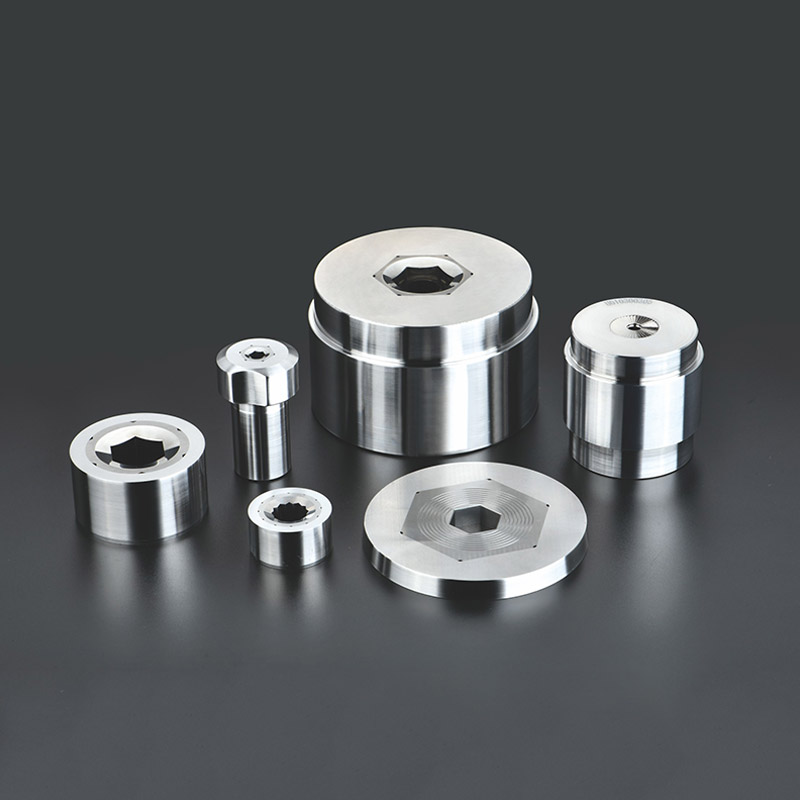
What Are Cold Forging Dies?
Cold forging dies are precision tooling components used to shape metal during the cold forging process.
A typical cold forging system may include dies, punches, and other tooling components. These tools must withstand repeated high loads while maintaining their dimensional accuracy.
The design of cold forging dies depends on several factors, including:
Material being forged
Part geometry
Required dimensions
Forming pressure
Production volume
Number of forming stages
Well-designed cold forging tooling helps control material flow and maintain consistent part dimensions during repeated production.
Cold Forging vs. Machining
Cold forging and machining use different approaches to produce metal components.
Machining removes material from a workpiece using Cutting Tools, while cold forging changes the shape of the material through pressure.
For high-volume production, cold forging can reduce material waste and shorten production cycles. It can also produce consistent parts when the tooling and process parameters are properly controlled.
However, the choice between cold forging and machining depends on the material, component design, production volume, dimensional requirements, and other manufacturing factors.
Advantages of Cold Forging
High Material Utilization
Because cold forging forms the material instead of removing large amounts of it, the process can achieve high material utilization and reduce material waste.
High Production Efficiency
Cold forging is suitable for automated and high-volume production. Multiple forming stages can be combined to produce components efficiently.
Consistent Dimensions
Precision cold forging dies allow manufacturers to control the shape and dimensions of finished parts with good repeatability. Proper die design is particularly important when producing large quantities of the same component.
Improved Material Properties
The plastic deformation involved in cold forging can contribute to favorable grain flow and mechanical properties in certain components. The actual results depend on the material and forming process.
Suitable for Mass Production
Cold forging is widely used for applications requiring large quantities of consistent metal components. Its combination of production efficiency, material utilization, and repeatability makes it suitable for many industrial applications.
Applications of Cold Forging
Cold forged parts are commonly used in many industrial applications, including:
Automotive fasteners and components
Bolts, screws, and nuts
Electrical and electronic components
Industrial hardware
Machinery components
Aerospace-related components
Copper and aluminum components
The specific cold forging process and tooling design depend on the geometry, material, tolerance, and production requirements of each component.
FAQ
Is cold forging done without heating?
Cold forging is generally performed at or near room temperature rather than heating the metal to the high temperatures commonly associated with hot forging. However, the exact process conditions depend on the material and application.
What is the difference between cold forging and hot forging?
Cold forging forms metal at relatively low temperatures, while hot forging heats the material to a temperature where it becomes significantly easier to deform. Cold forging can provide high dimensional accuracy and material utilization, while hot forging is often used for larger or more difficult-to-form components.
What are cold forging dies used for?
Cold forging dies are used to control the flow and final shape of metal during the forming process. Precision die design is essential for producing consistent cold forged parts.
What materials can be cold forged?
Common cold forging materials include carbon steel, stainless steel, aluminum, and copper. The suitability of a material depends on factors such as ductility, strength, component geometry, and forming requirements.
Is cold forging suitable for mass production?
Yes. Cold forging is particularly suitable for high-volume production because the process can be automated and offers good production efficiency and material utilization.