




A Cut Off Blade is a precision cutting component used in stamping dies and other tooling systems to cut, separate, or remove metal material during the manufacturing process. It is commonly used in progressive dies, compound dies, and other precision stamping applications where clean cutting and consistent part separation are required.
Unlike general-purpose Cutting Tools, a Cut Off Blade is designed specifically for integration into a die structure. Its geometry, hardness, dimensional accuracy, and material selection directly affect cutting performance, tool life, and the quality of stamped parts.
For manufacturers working with high-volume metal stamping, choosing the right Precision Cutting Blades is essential for maintaining stable production and reducing die maintenance.
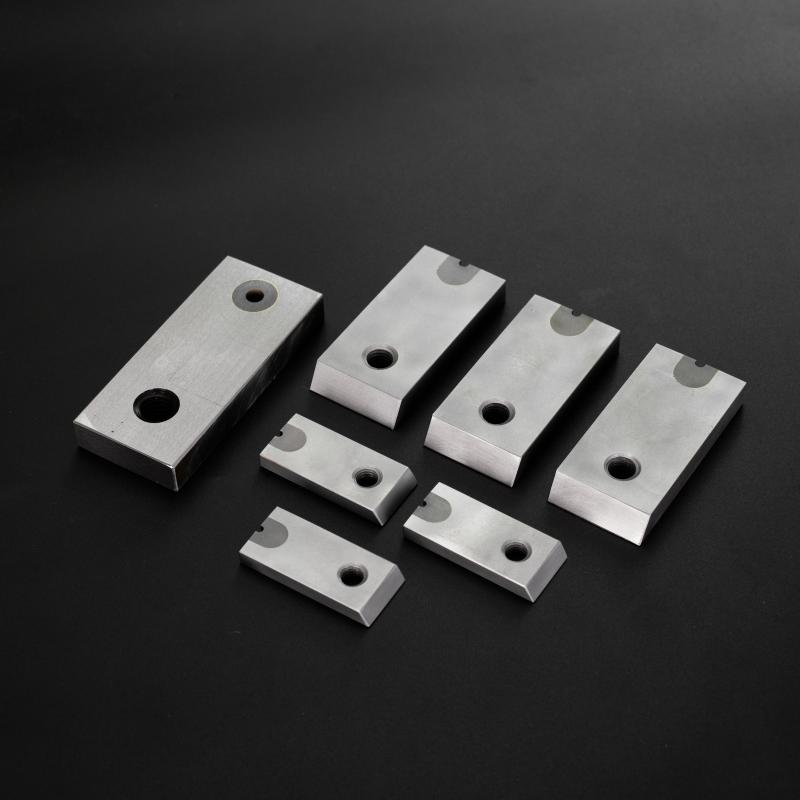
What Is a Cut Off Blade Used For?
The primary purpose of a Cut Off Blade is to cut and separate metal material or stamped components during the die stamping process.
In a progressive stamping operation, metal strip is continuously fed through the die. After forming, punching, and other operations are completed, the Cut Off Blade can separate the finished component from the remaining strip or divide connected sections of material.
Depending on the die design, a Cut Off Blade can be used for:
Separating finished stamped parts from a metal strip
Cutting continuous sheet or strip material
Dividing connected components after forming
Removing unwanted sections of material
Supporting high-speed stamping operations
Achieving accurate and repeatable part separation
This makes Cut Off Blades an important component in automated metal stamping and high-volume production.
How Does a Cut Off Blade Work in a Stamping Die?
A Cut Off Blade works together with other components of a Cut Off Die or stamping die to create a controlled cutting action.
When the upper and lower sections of the die move toward each other, the cutting edge of the blade applies concentrated force to the metal. The material is gradually sheared until the required section is completely separated.
The cutting result depends on several factors, including:
Blade geometry
Cutting clearance
Blade hardness
Material thickness
Workpiece material
Die alignment
Stamping speed
Surface finish of the cutting edge
Proper clearance and alignment are particularly important. Excessive clearance may produce burrs or deformation, while insufficient clearance can increase cutting force and accelerate blade wear.
Cut Off Blade vs. Cut Off Die
A Cut Off Blade and a Cut Off Die are closely related but refer to different components or concepts within a stamping system.
A Cut Off Blade is the cutting component that provides the actual cutting edge. A Cut Off Die, on the other hand, generally refers to the die or tooling assembly designed to perform the cut-off operation.
In a complete system, the blade must work precisely with the corresponding die components to achieve reliable material separation.
For this reason, a professional Cut Off Die Manufacturer needs to consider not only the blade itself but also the overall die structure, cutting clearance, material characteristics, and production requirements.
Applications of Cut Off Blades
Cut Off Blades are widely used in industries that rely on precision metal stamping and automated production.
Automotive Components
Automotive manufacturers use stamping dies to produce brackets, clips, terminals, structural components, and other metal parts. Cut Off Blades can separate individual components from continuous strip material during high-volume production.
Electrical and Electronic Components
Small stamped terminals, connectors, contacts, and other precision components often require accurate material separation. High-quality cutting blades help maintain consistent dimensions and clean cutting edges.
Hardware and Metal Parts
Fasteners, brackets, clips, springs, and other metal hardware can be manufactured using progressive stamping processes. Cut Off Blades support efficient part separation after forming and punching operations.
Industrial Components
Industrial equipment manufacturers may use precision stamping dies to produce a wide range of sheet metal components. Reliable cutting performance is especially important when production runs are long and automated.
What Blade Materials Are Used for Cut Off Blades?
Blade Materials have a major influence on cutting performance and service life.
The appropriate material depends on the workpiece material, production volume, cutting speed, required precision, and operating conditions.
Common choices may include:
Tool Steel
Tool steel is widely used for stamping and cutting applications because of its combination of hardness, toughness, wear resistance, and machinability.
High-Speed Steel
High-speed steel can provide excellent wear resistance and maintain cutting performance under demanding conditions. It can be considered for applications requiring High-Speed Cutting and extended tool life.
Carbide
Carbide offers very high hardness and wear resistance, making it suitable for demanding precision cutting applications. However, its higher brittleness means that die design, support, and operating conditions must be carefully controlled.
The correct material should always be selected according to the specific application rather than simply choosing the hardest available material.
Why Are Precision Cutting Blades Important?
In high-volume stamping, even a small change in cutting performance can affect thousands or millions of parts. This is why Precision Cutting Blades are important for maintaining consistent production.
A high-quality Cut Off Blade can help manufacturers achieve:
Accurate part separation
Consistent cutting dimensions
Reduced burr formation
Longer service life
Stable high-speed production
Lower die maintenance requirements
Improved production efficiency
Precision grinding and accurate control of the cutting edge are especially important for applications involving small components and tight dimensional requirements.
Cut Off Blades for High-Speed Cutting
Modern progressive stamping lines can operate at high production speeds. Under these conditions, the cutting blade is exposed to repeated mechanical loads and friction.
For High-Speed Cutting, the blade needs to maintain its edge while resisting wear, chipping, and deformation.
Important considerations include blade material, cutting geometry, die clearance, heat treatment, surface treatment, and the compatibility between the blade and workpiece material.
A properly engineered Cut Off Blade allows the stamping system to maintain stable cutting performance even during continuous production.
Cut Off Blade vs. Cut Off Saw Blades
Although the names are similar, Cut Off Blades used in stamping dies are different from Cut Off Saw Blades.
Cut Off Saw Blades are generally circular or similar saw-type cutting tools used with cutting machines to separate materials. They are commonly used for cutting bars, tubes, profiles, and other workpieces.
A stamping Cut Off Blade, however, is integrated into a die and uses the relative movement between die components to shear the material.
Therefore, when sourcing a blade for a stamping die, buyers should specify the die application rather than simply searching for general Metal Cutting Blades or Cut Off Saw Blades.
How to Choose the Right Cut Off Blade?
Selecting the correct Cut Off Blade requires consideration of the complete stamping application.
Workpiece Material
Different materials require different cutting characteristics. Mild steel, stainless steel, aluminum, copper, and other alloys can place different demands on the cutting edge.
Material Thickness
Thicker material generally requires greater cutting force and a suitable blade design. The blade geometry and die clearance should be matched to the material thickness.
Production Volume
For high-volume production, wear resistance and service life become especially important. A more durable blade material may reduce replacement frequency and production downtime.
Cutting Speed
High-speed stamping requires a blade that can withstand repeated impact and mechanical stress while maintaining its cutting edge.
Required Precision
Applications involving small or high-precision components require accurately manufactured cutting edges and stable dimensional tolerances.
Why Work With a Professional Cut Off Blade Manufacturer?
A professional Cut Off Blade Manufacturer can provide more than a standard cutting component. The manufacturer should be able to understand the customer's die structure, workpiece material, production speed, dimensional requirements, and expected service life.
A reliable Cut Off Blade Supplier can also provide customized blade dimensions, material options, heat treatment, precision grinding, and other manufacturing services according to the application.
For complex stamping applications, working directly with an experienced manufacturer can help ensure that the blade is properly matched to the Cut Off Die and the overall production process.
Custom Cut Off Die and Blade Solutions
Different stamping applications require different blade profiles, dimensions, materials, and cutting geometries. Standard blades may not always meet the requirements of a specialized die.
An experienced Cut Off Die Manufacturer can develop customized tooling based on technical drawings, samples, material specifications, and production requirements.
A professional Cut Off Die Supplier may also provide complete tooling solutions, including die components, cutting blades, replacement parts, and technical support.
Customized solutions are particularly useful for high-volume production, complex component geometries, and applications requiring tight cutting tolerances.
Frequently Asked Questions
What is a Cut Off Blade used for?
A Cut Off Blade is used in stamping dies to cut and separate metal material or finished components from a continuous strip or sheet during the manufacturing process.
What is the difference between a Cut Off Blade and a Cut Off Die?
A Cut Off Blade is the cutting component that provides the cutting edge, while a Cut Off Die refers to the die or tooling system designed to perform the cut-off operation.
What materials are used to make Cut Off Blades?
Common Blade Materials include tool steel, high-speed steel, and carbide. The appropriate material depends on the workpiece, cutting speed, production volume, and required tool life.
Are Cut Off Blades used for high-speed stamping?
Yes. Properly designed Cut Off Blades can be used for high-speed stamping and continuous production. Material selection, blade geometry, die clearance, and heat treatment all affect high-speed cutting performance.
How do I choose a Cut Off Blade Supplier?
Look for a Cut Off Blade Supplier with experience in precision stamping dies, suitable blade materials, accurate machining and grinding capabilities, and the ability to provide customized solutions for your application.
A Cut Off Blade is an important precision component in stamping and die manufacturing. It is primarily used to cut and separate metal material or finished parts during progressive stamping, compound stamping, and other automated production processes.
The right blade material, geometry, cutting clearance, and manufacturing precision can significantly influence cutting quality and tool life. For demanding applications, working with an experienced Cut Off Blade Manufacturer or Cut Off Die Manufacturer can help ensure that the blade is correctly matched to the die and production requirements.