




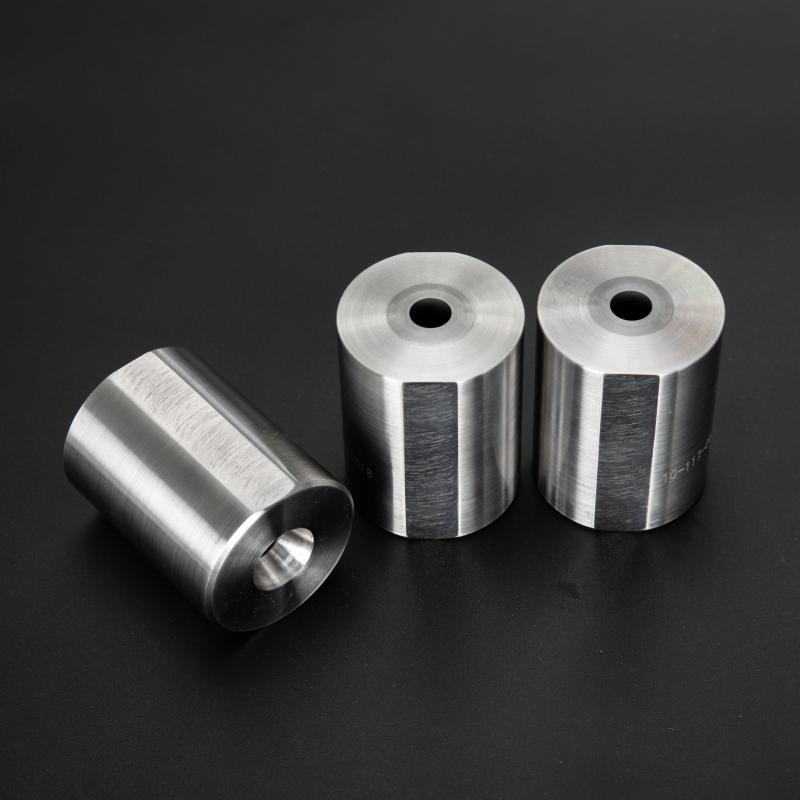
An Inner Cutting Die is a precision tooling component used to cut or form internal features in a workpiece during a stamping or die cutting operation. It is commonly used when a metal part requires an internal hole, slot, opening, or other precisely defined internal profile.
Unlike a conventional outer cutting operation, an Inner Cutting Die focuses on creating or cutting material within the internal area of a component. It works together with a punch, die block, guide components, and other tooling elements to achieve accurate and repeatable cutting results.
For applications requiring high dimensional accuracy and consistent production, properly designed Inner Cutting Dies are an important part of precision tooling.
How Does Inner Cutting Die Work?
An Inner Cutting Die works by using controlled shearing between a cutting punch and a corresponding die opening. During the Die Cutting Process, the workpiece is positioned accurately within the tooling, and the cutting punch moves into the material.
As the punch enters the die opening, the material is subjected to compressive and shearing forces. Once the cutting force exceeds the material's resistance, the material separates along the designed cutting profile.
The basic working process can be summarized as:
Workpiece Positioning → Punch Movement → Material Shearing → Internal Profile Formation → Part Removal
The accuracy of the finished internal feature depends on several factors, including punch geometry, die clearance, material properties, alignment, and the precision of the tooling.
What Is an Inner Cutting Die Used For?
An Inner Cutting Die is primarily used to produce internal features in stamped or machined components.
Typical applications include:
Internal holes
Slots and openings
Internal contours
Complex internal profiles
Keyways and similar features
Precision internal cutouts
Separation of material within a defined internal area
For example, if a metal component requires a precisely positioned internal hole, an Inner Hole Cutting Die can be designed to create the required feature during the stamping operation.
This allows the internal feature to be produced repeatedly without requiring a separate machining operation for every individual part.
The Working Principle of an Inner Hole Cutting Die
An Inner Hole Cutting Die generally consists of a cutting punch and a matching die opening.
The workpiece is placed between the cutting components. When the press applies force, the punch moves through the material and enters the corresponding die opening. The material between the punch and die is subjected to controlled shear.
The cutting clearance between the punch and die is critical. If the clearance is too large, excessive burrs or dimensional variation may occur. If the clearance is too small, cutting force may increase and the tooling may experience unnecessary wear.
Therefore, precision manufacturing and correct clearance selection are essential for reliable internal hole cutting.
Inner Cutting Die in the Die Cutting Process
The Die Cutting Process can involve multiple operations depending on the geometry and production requirements of the component.
In a progressive die, for example, a metal strip can move through several stations. Forming, punching, bending, and cutting operations may be completed at different positions before the final component is produced.
An Inner Cutting Die can perform the internal cutting operation at a dedicated station.
A typical process may include:
Feeding the material into the die.
Positioning and guiding the material.
Forming or punching preliminary features.
Using the Inner Cutting Tool to create the internal profile.
Performing additional forming or cutting operations.
Separating and removing the finished component.
This integrated approach allows manufacturers to produce complex parts efficiently in high-volume production.
What Is the Difference Between Inner Cutting Die and Outer Cutting?
The main difference is the location of the cutting operation.
Outer cutting generally cuts around the external profile of a component, while an Inner Cutting Die creates a feature within the material or cuts an internal profile.
For example:
Outer cutting → creates the external shape of a part.
Inner cutting → creates holes, slots, openings, or internal contours.
Many precision stamping dies require both operations. Combining them into a properly engineered tooling system allows manufacturers to produce complete components with fewer secondary operations.
Inner Cutting Tool and Die Structure
An Inner Cutting Tool must be accurately matched with the corresponding die components.
Depending on the application, an inner cutting assembly may include:
Cutting punch
Die insert
Guide components
Retaining components
Stripper or pressure plate
Backing components
Precision locating elements
The exact structure depends on the material, part geometry, press conditions, and required production volume.
For complex applications, the cutting punch and die insert may need to be manufactured to very tight tolerances to ensure consistent internal dimensions.
Why Precision Matters in Inner Cutting Dies
The quality of an Inner Cutting Die directly affects the dimensional accuracy of the finished part.
High-quality Precision Cutting Dies should provide stable cutting performance throughout the production cycle. Important factors include:
Dimensional Accuracy
The punch and die must maintain accurate dimensions so that internal holes and profiles remain within the specified tolerance.
Cutting Clearance
Correct clearance helps control burrs, cutting force, and tool wear.
Alignment
Accurate alignment between the punch and die prevents uneven loading and premature wear.
Surface Finish
A properly finished cutting edge can improve cutting performance and reduce friction during repeated operations.
Tool Life
Suitable material selection and heat treatment can improve resistance to wear and deformation during continuous production.
Materials Used for Inner Cutting Dies
The material selected for an Inner Cutting Die depends on the workpiece material, production volume, cutting conditions, and required tool life.
Common tooling materials may include tool steels, high-speed steels, carbide, and other wear-resistant materials.
For high-volume applications, the tooling needs to withstand repeated cutting forces without excessive deformation or edge wear.
The correct material should therefore be selected according to the actual Die Cutting Tools requirements rather than using one material for every application.
Custom Cutting Dies for Complex Components
Not every component can be produced using a standard die design. Parts with irregular internal profiles, multiple holes, tight tolerances, or complex geometries may require Custom Cutting Dies.
A custom tooling solution can be developed according to:
Part drawings
Material type
Material thickness
Internal feature dimensions
Production volume
Press specifications
Required tolerances
Expected tool life
Custom tooling allows the cutting geometry and die structure to be optimized for the specific application.
Tooling for Die Cutting Applications
Tooling for Die Cutting requires more than simply manufacturing a cutting edge. The complete tooling system must be designed to work reliably under the actual production conditions.
An experienced tooling manufacturer will consider:
Material properties
Cutting clearance
Punch and die geometry
Press capacity
Feeding accuracy
Guide system
Tool material
Heat treatment
Surface treatment
Production speed
Proper integration of these factors helps maintain stable production and reduce unexpected tooling maintenance.
Applications of Inner Cutting Dies
Inner Cutting Dies are used in many precision metal stamping applications.
Automotive Components
Automotive brackets, clips, terminals, and other stamped parts may require precise internal holes and openings for assembly.
Electrical Components
Electrical terminals and connector components often require small and accurately positioned internal features.
Industrial Hardware
Industrial hardware components can require slots, holes, and complex internal profiles produced during progressive stamping.
Precision Metal Parts
Small metal components with tight dimensional requirements can benefit from precision inner cutting tooling, especially when large production volumes are involved.
How to Choose an Inner Cutting Die Manufacturer?
When selecting an Inner Cutting Die Manufacturer, buyers should evaluate more than the quoted price.
Important factors include:
Experience in precision stamping tooling
Manufacturing and grinding capabilities
Tool material options
Dimensional inspection capabilities
Custom tooling experience
Understanding of the customer's production process
Ability to manufacture replacement tooling
Quality control procedures
An experienced manufacturer can help determine the appropriate cutting structure, material, clearance, and tooling configuration based on the actual application.
Working With an Inner Cutting Die Supplier
A reliable Inner Cutting Die Supplier should be able to provide tooling that matches the customer's part design and production requirements.
Before placing an order, customers should provide technical information such as the part drawing, material specification, material thickness, required tolerance, production volume, and press information.
Based on these details, the supplier can recommend suitable Inner Cutting Dies, materials, and cutting configurations.
For specialized applications, working directly with an experienced Inner Cutting Die Supplier can also make replacement, maintenance, and future tooling modifications easier.
Frequently Asked Questions
What is an Inner Cutting Die?
An Inner Cutting Die is a precision die component used to create internal holes, slots, openings, or other internal profiles in a workpiece during a stamping or die cutting operation.
How does an Inner Cutting Die work?
It works through controlled shearing between a cutting punch and die opening. The punch enters the material and removes or separates the material according to the required internal profile.
What is an Inner Hole Cutting Die used for?
An Inner Hole Cutting Die is used to create accurately positioned holes or internal openings in metal components during a stamping or die cutting process.
What is the difference between an Inner Cutting Die and an Inner Cutting Tool?
An Inner Cutting Die generally refers to the die or tooling component used for internal cutting, while an Inner Cutting Tool can be used more broadly to describe the cutting tool or cutting assembly performing the operation.
Can Inner Cutting Dies be customized?
Yes. Custom Cutting Dies can be designed according to the component geometry, material, thickness, tolerance, production volume, and press requirements.
How can I choose an Inner Cutting Die Supplier?
Choose an Inner Cutting Die Supplier with experience in precision tooling, accurate manufacturing capabilities, suitable tooling materials, and experience with custom die cutting applications.
An Inner Cutting Die uses controlled shearing between precision tooling components to create internal holes, slots, openings, and other internal profiles in a workpiece. Its performance depends on accurate punch and die geometry, suitable cutting clearance, proper alignment, appropriate tooling materials, and precise manufacturing.
For demanding applications, Precision Cutting Dies and Custom Cutting Dies can provide stable dimensional accuracy and reliable production performance. Working with an experienced Inner Cutting Die Manufacturer or Inner Cutting Die Supplier can help manufacturers develop tooling that is properly matched to their material, component design, and production requirements.