




A Cold Heading Mold is a precision tool used to form metal wire into fasteners and other metal components through a cold forming process. It plays an essential role in manufacturing bolts, screws, nuts, rivets, pins, and other industrial fasteners. By applying high pressure to metal materials at room temperature, cold heading molds reshape wire into specific geometries without requiring heating, helping manufacturers achieve high production efficiency, consistent dimensions, and excellent material utilization.
As an important part of cold heading tooling, these molds directly influence product accuracy, surface quality, production speed, and tool service life. Whether producing standard fasteners or complex customized components, selecting the right cold heading die is essential for stable and efficient manufacturing.
For fastener manufacturers looking for reliable tooling solutions, precision-engineered cold heading molds provide the strength, wear resistance, and dimensional consistency required for continuous industrial production.
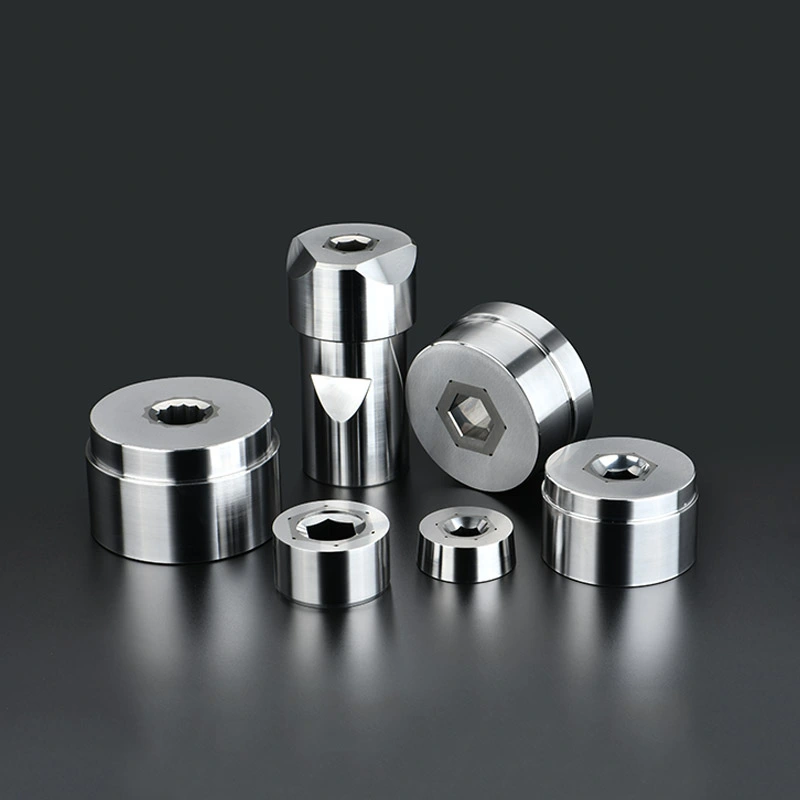
What Is a Cold Heading Mold?
A cold heading mold, also known as a cold heading die, is a specialized forming tool installed in cold heading machines. It is designed to shape metal wire or blanks into finished or semi-finished components through high-pressure deformation at room temperature.
Unlike conventional machining methods that remove material to create a shape, cold heading uses compressive force to redistribute the metal. This process helps maintain material integrity, reduce waste, and improve production efficiency.
A typical cold heading mold system may include several forming tools, such as:
Heading Dies: Shape the head of bolts, screws, and other fasteners.
Punches: Apply forming pressure to create specific head profiles and geometries.
Trimming Dies: Remove excess material to achieve the required dimensions.
Carbide Dies: Provide excellent hardness and wear resistance in high-volume production.
The design and precision of each component affect the final product quality and the overall performance of the cold heading machine.
How Does a Cold Heading Die Work?
A cold heading die works by applying controlled compressive force to a metal blank or wire segment. During the forming process, the material flows into the cavity of the die, gradually taking the required shape.
The typical cold heading process involves the following steps:
1. Wire Feeding and Cutting
Metal wire is fed into the cold heading machine and cut into blanks of a predetermined length. The blank size depends on the dimensions and weight of the final product.
2. Initial Forming
The blank is positioned inside the die, where a punch applies pressure to begin forming the metal. The material is compressed and redistributed to create the basic component geometry.
3. Multi-Station Forming
For more complex fasteners, multiple forming stations are used to gradually shape the workpiece. Each station performs a specific operation, reducing excessive deformation in a single step.
4. Final Shaping
The final forming station establishes the required dimensions, head shape, and surface profile. Additional trimming or finishing operations may be performed when necessary.
5. Inspection and Quality Control
Finished components are inspected for dimensional accuracy, surface quality, and structural consistency to ensure they meet manufacturing requirements.
A well-designed cold heading die helps maintain stable material flow, reduce forming defects, and extend tooling service life.
Types of Cold Heading Molds
Different fastener designs and production requirements require different mold structures. A professional cold heading mold manufacturer can provide tooling solutions based on material specifications, machine configurations, and component geometry.
Tungsten Carbide Cold Heading Die
A tungsten carbide cold heading die is widely used in high-volume fastener manufacturing because of its exceptional hardness, compressive strength, and wear resistance.
Tungsten carbide is particularly suitable for applications involving high forming pressure and continuous production. Compared with conventional tool steel, carbide tooling can offer improved resistance to deformation and abrasive wear when properly selected and manufactured.
Key advantages include:
High hardness and excellent wear resistance.
Strong compressive strength under heavy forming loads.
Stable dimensional accuracy during repeated production.
Long service life in suitable operating conditions.
Reduced tooling replacement frequency.
Tungsten Carbide Dies are commonly used for producing bolts, screws, nuts, rivets, and other precision fasteners.
Precision Cold Heading Molds
Precision cold heading molds are designed to achieve tight dimensional tolerances and consistent forming results. They are particularly important for manufacturing fasteners with complex geometries or demanding quality requirements.
Their performance depends on several factors, including cavity design, material selection, machining accuracy, heat treatment, and surface finishing.
Precision tooling helps manufacturers reduce dimensional variations, minimize defective products, and maintain consistent production quality.
Custom Cold Heading Dies
Custom cold heading dies are developed according to specific product drawings, technical requirements, and production conditions.
Standard tooling may not meet the requirements of specialized fasteners, non-standard screws, automotive components, or customized metal parts. Custom-designed dies allow manufacturers to optimize the forming process for different shapes, dimensions, and materials.
Customized solutions may include:
Different die diameters and cavity geometries.
Special forming structures for non-standard fasteners.
Customized carbide grades and tool materials.
Specific hardness and surface treatment requirements.
Tooling configurations compatible with different cold heading machines.
Working with an experienced manufacturer helps ensure that custom dies match the actual production process.
Materials Used in Cold Heading Tooling
Material selection is one of the most important factors affecting cold heading mold performance. The tooling material must withstand repeated impact, high compressive loads, friction, and continuous mechanical stress.
Common materials include:
| Tool Material | Main Characteristics | Typical Applications |
|---|---|---|
| Tungsten Carbide | High hardness, compressive strength, and wear resistance | High-volume fastener production |
| High-Speed Steel | Good toughness and wear resistance | Punches and forming tools |
| Alloy Tool Steel | Good strength and heat-treatment performance | General cold heading dies |
| Powder Metallurgy Steel | Uniform microstructure and balanced properties | Precision forming applications |
Among these materials, tungsten carbide is a popular choice for applications requiring high wear resistance and dimensional stability.
However, the best material depends on the workpiece material, forming pressure, production volume, and required tooling life. A suitable material selection should balance hardness, toughness, and resistance to cracking.
Applications of Cold Heading Dies
Cold heading dies are widely used in industries that require large quantities of precision metal fasteners and formed components.
Automotive Industry
Automotive manufacturers use cold heading dies to produce bolts, nuts, screws, rivets, and other fastening components. These parts must meet strict dimensional and mechanical requirements for reliable assembly.
Construction Industry
Cold heading tooling is used to manufacture structural bolts, screws, anchors, and other fastening products for construction applications.
Electronics Industry
Miniature screws, precision pins, connectors, and other small metal components often require accurate forming tools to maintain consistent dimensions.
Machinery and Industrial Equipment
Cold heading molds support the production of industrial fasteners and mechanical components used in machinery, equipment assembly, and maintenance.
Hardware Manufacturing
From standard screws to specialized fasteners, cold heading dies help manufacturers achieve efficient mass production with consistent product quality.
How to Choose a Reliable Cold Heading Mold Manufacturer
Choosing the right cold heading mold manufacturer is important for maintaining production efficiency, reducing tooling costs, and ensuring consistent fastener quality.
Before selecting a supplier, consider the following factors:
1. Material Quality
Check whether the manufacturer uses reliable tool steel or tungsten carbide materials. Material consistency directly affects wear resistance, toughness, and tooling life.
2. Manufacturing Precision
The manufacturer should have advanced machining, grinding, and inspection equipment to ensure accurate dimensions and consistent cavity geometry.
3. Customization Capabilities
If you manufacture non-standard fasteners, choose a supplier capable of developing custom cold heading dies based on technical drawings and actual production requirements.
4. Quality Control
A reliable supplier should have inspection procedures covering material properties, dimensional accuracy, hardness, and finished surface quality.
5. Industry Experience
Experience in fastener forming dies and cold heading tooling helps manufacturers understand different forming processes and recommend suitable tooling structures.
6. Technical Support
Professional technical support is valuable when optimizing die designs, solving premature wear problems, or improving production efficiency.
How to Extend the Service Life of Cold Heading Molds
Even high-quality cold heading molds require proper operation and maintenance. The following practices can help improve tooling performance and reduce unexpected downtime.
Select the correct tooling material: Match carbide grades or tool steel specifications to the forming load and workpiece material.
Optimize forming parameters: Avoid excessive pressure and improper machine settings that may cause premature tool damage.
Use suitable lubrication: Proper lubrication reduces friction and heat generation during the forming process.
Inspect molds regularly: Check for cracks, wear, chipping, and dimensional changes.
Maintain proper alignment: Incorrect alignment between punches and dies can cause uneven loading and premature failure.
Replace worn components promptly: Timely replacement helps prevent defective products and damage to other tooling components.
Proper tooling design combined with regular maintenance can significantly improve production stability and overall manufacturing efficiency.
Frequently Asked Questions About Cold Heading Molds
1. What is the difference between a cold heading mold and a cold heading die?
The terms cold heading mold and cold heading die are often used interchangeably in the fastener manufacturing industry. Both refer to precision tooling used to shape metal blanks through cold forming. Depending on the context, a die may refer to a specific forming component, while mold can describe a broader tooling assembly.
2. Why is tungsten carbide used for cold heading dies?
Tungsten carbide offers high hardness, excellent compressive strength, and outstanding wear resistance. These properties make it suitable for handling repeated high-pressure forming operations and maintaining dimensional accuracy during mass production.
3. Can cold heading dies be customized?
Yes. Custom cold heading dies can be manufactured according to product drawings, dimensions, material specifications, and machine requirements. Custom tooling is particularly useful for producing non-standard fasteners and specialized metal components.
4. What factors affect the service life of a cold heading mold?
The main factors include tooling material, die design, forming pressure, workpiece material, lubrication, machine alignment, and maintenance practices. Proper material selection and optimized forming conditions can help extend tooling life.
5. What products can be manufactured using cold heading tooling?
Cold heading tooling is commonly used to manufacture bolts, screws, nuts, rivets, pins, studs, and various customized fasteners. It is also used for producing precision metal components in automotive, construction, electronics, and machinery industries.
6. How do I choose the right cold heading mold manufacturer?
Look for a manufacturer with reliable raw materials, precision machining capabilities, strict quality inspection, customization experience, and technical support. Providing product drawings, material specifications, and machine information can help the manufacturer recommend suitable tooling.
A high-quality cold heading mold is essential for efficient and reliable fastener manufacturing. From tungsten Carbide Cold Heading Dies to customized precision forming tools, the right tooling solution helps improve dimensional accuracy, reduce production defects, and maintain stable manufacturing performance.
Whether you need standard cold heading dies or custom cold heading dies for specialized fasteners, choosing an experienced manufacturer with strong material expertise and precision machining capabilities is key to achieving long-term production efficiency.
Contact us today to discuss your cold heading tooling requirements and find a suitable solution for your fastener manufacturing process.