




Washers for Die Fastening are essential industrial fastening components designed to support the installation, positioning, and secure mounting of dies in various tooling systems. Used together with bolts, screws, and other fastening hardware, these washers help distribute clamping forces, protect mounting surfaces, and improve the stability of die assemblies.
In industrial manufacturing, proper die fastening is important for maintaining tooling accuracy, reducing vibration, and ensuring consistent production performance. A high-quality Die Fastening Washer provides reliable contact between fastening elements and tooling surfaces, helping prevent localized stress and unnecessary wear during operation.
Whether used in Cold Heading machines, stamping equipment, or other precision manufacturing systems, properly designed die fastening components contribute to stable tooling installation and long-term operational reliability. For manufacturers with specific dimensional and load requirements, Custom Die Fastening Washers offer flexible solutions for different industrial applications.
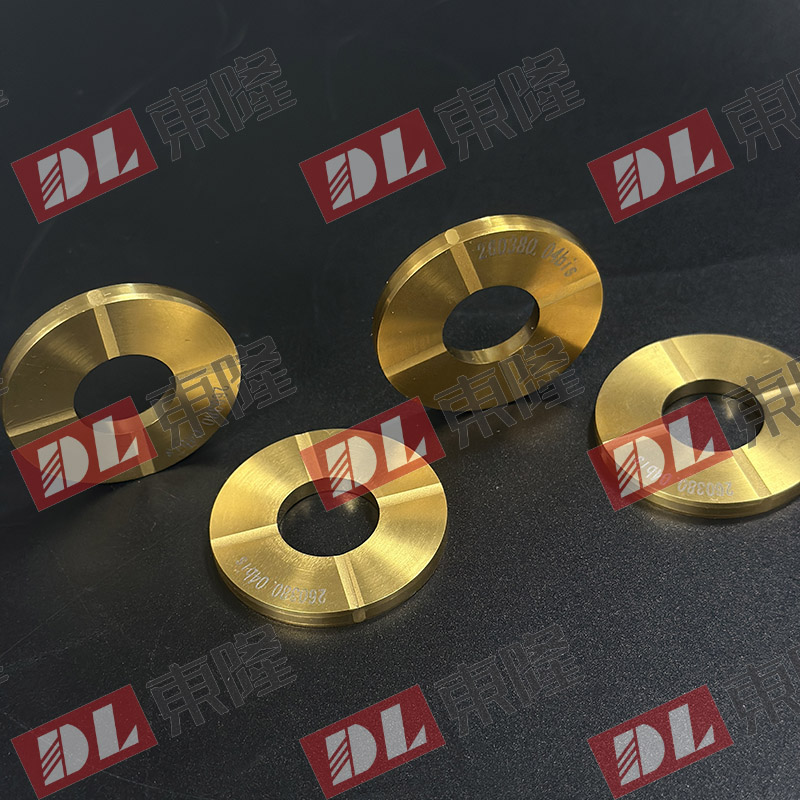
What Are Washers for Die Fastening?
Washers for die fastening are mechanical components installed between a fastener, such as a bolt or screw, and the surface of a die or die holder. Their primary function is to distribute fastening pressure over a larger contact area while protecting the surrounding tooling components.
Compared with ordinary fastening washers, industrial die fastening washers may require specific dimensions, thicknesses, hardness levels, and surface finishes to meet the requirements of precision tooling systems.
Depending on the equipment structure and installation requirements, a Mold Fastening Washer may be designed in different shapes and configurations to ensure proper compatibility with the die assembly.
Common applications include:
Securing dies and die holders in industrial machines.
Distributing clamping pressure during tooling installation.
Protecting tooling surfaces from bolt head damage.
Supporting stable positioning of die assemblies.
Providing spacing or dimensional compensation where required.
The correct washer design helps improve fastening reliability and maintain the mechanical stability of the entire tooling system.
Main Functions of a Die Fastening Washer
A Die Fastening Washer may appear to be a simple mechanical component, but it plays an important role in tooling installation and equipment operation.
1. Distributing Clamping Force
When bolts or screws are tightened, concentrated pressure is applied to the contact surface. A washer increases the effective contact area, helping distribute the clamping force more evenly and reducing localized stress.
2. Protecting Tooling Surfaces
Repeated installation and removal can cause scratches, indentation, or surface damage around fastening points. A suitable die fastening washer acts as a protective layer between the fastener and the tooling surface.
3. Improving Fastening Stability
Properly selected washers help maintain reliable contact between fastening components. Depending on the washer design, they can also contribute to reducing loosening under vibration and repeated mechanical loading.
4. Maintaining Installation Accuracy
In precision tooling applications, washer thickness and dimensional consistency can influence the positioning of assembled components. Precision-manufactured washers help maintain the required installation dimensions.
Types of Washers for Die Fastening
Different tooling systems have different fastening requirements. Selecting the appropriate washer depends on the installation structure, fastening load, operating environment, and required mechanical properties.
Flat Washers
Flat washers are among the most widely used fastening components. They feature a simple flat structure with a central hole for bolts or screws.
Their main purpose is to distribute clamping force, protect mounting surfaces, and provide a stable contact area. Flat washers are commonly used in die holders, machine assemblies, and general industrial fastening applications.
Hardened Washers
Hardened washers are manufactured from heat-treated materials to provide improved hardness and resistance to deformation.
They are suitable for fastening applications involving higher loads or demanding mechanical conditions. In precision tooling systems, hardened washers help maintain their structural integrity under repeated tightening forces.
Spring Washers
Spring washers are designed with an elastic structure that can provide a spring effect when compressed. They are used in certain fastening applications where additional resistance to loosening is required.
However, their suitability depends on the specific joint design and operating conditions. Proper fastener selection and tightening methods remain essential for reliable connections.
Custom Die Fastening Washers
For specialized tooling systems, standard washers may not meet the required dimensions, shapes, or mechanical specifications.
Custom Die Fastening Washers can be manufactured according to customer drawings, samples, or technical requirements. Customization options may include:
Customized outer diameter and inner diameter.
Different thicknesses and dimensional tolerances.
Special shapes and structural designs.
Specific material grades and hardness requirements.
Customized surface treatments and finishes.
These solutions are suitable for equipment manufacturers and tooling companies requiring non-standard fastening components.
Materials Used in Mold Fastening Washers
Material selection directly affects the strength, hardness, wear resistance, and service life of a Mold Fastening Washer.
Common materials include:
| Material | Main Characteristics | Typical Applications |
|---|---|---|
| Carbon Steel | Good strength and cost efficiency | General industrial fastening |
| Alloy Steel | Improved mechanical strength and toughness | Heavy-duty tooling assemblies |
| Stainless Steel | Corrosion resistance and durability | Moisture-sensitive environments |
| Hardened Steel | High hardness and resistance to deformation | High-load fastening applications |
| Tool Steel | Good wear resistance and mechanical properties | Specialized precision tooling |
The most suitable material depends on the fastening load, operating environment, tooling structure, and required service life.
For demanding industrial applications, material selection should consider both mechanical strength and dimensional stability.
Applications of Die Fastening Components
Die Fastening Components are used in various industrial manufacturing systems where dies and tooling assemblies must be securely installed.
Cold Heading Machines
In cold heading production, tooling components are exposed to repeated mechanical forces and high forming pressure. Washers can be used in suitable mounting and fastening positions to support stable installation of die holders and related assemblies.
As part of Cold Heading Tooling Components, these washers must meet the dimensional and mechanical requirements of the equipment.
Stamping and Pressing Equipment
Stamping dies require reliable mounting structures to maintain positioning accuracy during repeated pressing operations. Industrial washers help distribute fastening loads and protect the contact surfaces of die assemblies.
Mold Manufacturing
In mold manufacturing and maintenance, fastening washers are used in suitable mounting structures to support the installation of mold components and related hardware.
A properly selected Mold Fastening Washer helps improve assembly consistency and protect the contact surfaces during installation.
Precision Machinery
Precision machinery often contains specialized tooling assemblies that require accurate positioning and stable fastening. Custom washers can be designed to meet specific installation dimensions and mechanical requirements.
How to Choose the Right Die Fastening Washer
Selecting the right washer is important for achieving reliable fastening performance and maintaining tooling stability.
Before purchasing Custom Industrial Washers, manufacturers should consider the following factors.
1. Dimensional Requirements
Check the inner diameter, outer diameter, thickness, and dimensional tolerances. These dimensions must match the bolts, mounting holes, and tooling structure.
2. Material Selection
Choose suitable materials according to the fastening load, operating environment, and mechanical requirements. Hardened steel may be appropriate for higher-load applications, while stainless steel is useful where corrosion resistance is important.
3. Hardness and Mechanical Strength
The washer should withstand the required clamping force without excessive deformation. Material hardness and mechanical strength should be selected according to the actual application.
4. Surface Treatment
Depending on the operating environment, surface treatments may improve corrosion resistance, surface durability, or appearance.
5. Equipment Compatibility
Ensure that the washer fits the die holder, mounting structure, and fastening hardware. Incorrect dimensions may affect installation accuracy and fastening performance.
6. Manufacturer's Production Capabilities
Choose a manufacturer with precision machining, dimensional inspection, material control, and customization capabilities to ensure consistent product quality.
Why Choose Custom Industrial Washers?
Standard washers are suitable for many general fastening applications. However, specialized tooling systems often require components with specific dimensions and mechanical properties.
A professional supplier of Custom Industrial Washers can provide solutions based on actual application requirements.
Key advantages include:
Application-Specific Design: Products can be manufactured according to technical drawings and equipment requirements.
Dimensional Accuracy: Precision machining helps ensure consistent dimensions and reliable assembly.
Flexible Material Options: Different steel grades and hardness specifications can be selected for specific working conditions.
Improved Compatibility: Customized dimensions help ensure proper fitting with existing tooling structures.
Consistent Production Quality: Standardized manufacturing and inspection procedures support repeatable product performance.
For tooling manufacturers, machine builders, and industrial equipment suppliers, customized fastening components help simplify assembly and meet specialized production requirements.
Frequently Asked Questions About Washers for Die Fastening
1. What are washers for die fastening used for?
Washers for die fastening are used to distribute clamping forces, protect mounting surfaces, and support the secure installation of dies and die holders. They are commonly used in industrial tooling and machinery assemblies.
2. What is the difference between a die fastening washer and a standard washer?
A die fastening washer is selected or designed according to the dimensions, loading conditions, and installation requirements of a specific tooling assembly. Standard washers are generally manufactured for broader fastening applications.
3. Can die fastening washers be customized?
Yes. Custom die fastening washers can be manufactured according to drawings, samples, or technical specifications. Common customization options include diameter, thickness, material, hardness, shape, and surface treatment.
4. Which materials are commonly used for mold fastening washers?
Common materials include carbon steel, alloy steel, stainless steel, hardened steel, and tool steel. The appropriate material depends on the required strength, hardness, corrosion resistance, and operating conditions.
5. Are die fastening washers used in cold heading machines?
Yes. They can be used in suitable mounting and fastening structures within cold heading equipment, including die holder assemblies and related tooling installations. Their specifications should match the actual equipment design.
6. How do I order custom die fastening components?
To order custom components, provide technical drawings or samples along with the required dimensions, material specifications, hardness, surface treatment, and expected quantity. This information helps the manufacturer evaluate the design and production requirements.
Washers for die fastening are important mechanical components that support reliable tooling installation, distribute clamping forces, and protect die mounting surfaces. From standard flat washers to customized hardened washers, the right design and material selection help maintain stable fastening performance in industrial manufacturing.
As essential Die Fastening Components and cold heading tooling Components, precision washers are widely used in cold heading machines, stamping equipment, mold assemblies, and precision machinery.
If you are looking for a reliable supplier of Custom Die Fastening Washers or other precision tooling parts, contact us with your drawings and technical requirements to discuss a suitable manufacturing solution.